How to Prevent Plumbing Emergencies: Essential Tips for Homeowners and Small Businesses
Plumbing emergencies never wait for a good time. One minute, your kitchen is calm. The next, water is rushing across the floor or a stubborn clog is backing up your day. For homeowners and small business owners, these moments bring stress, expense, and disruption.
At Sarum Plumbing, we’ve seen it all. The truth? Most emergencies can be prevented. With a little know-how, a watchful eye, and a few simple routines, you can keep your plumbing system running smoothly—and avoid those heart-stopping surprises.
Common Causes of Plumbing Emergencies
Plumbing systems are like the veins of your building. When something goes wrong, the effects ripple everywhere. Here are the most frequent culprits behind plumbing emergencies:
- Hidden leaks: Small drips can turn into big problems, especially inside walls or under floors.
- Clogged drains and toilets: Hair, grease, wipes, and other debris build up, blocking water flow.
- Burst pipes: Sudden temperature swings or aging pipes can cause them to split, flooding your space.
- Water heater failures: Sediment buildup or faulty parts can leave you with icy showers—or worse, a leak.
- Faulty fixtures: Old or poorly installed taps, valves, and toilets can malfunction without warning.
Understanding these risks is the first step. Next, let’s look at what you can do to stay ahead.
Quick Safety Checklist 🛠️
A few smart habits can make all the difference. Run through this checklist every few months:
- Inspect under sinks for signs of moisture, rust, or mold.
- Listen for dripping sounds behind walls, especially at night.
- Test water pressure—a sudden drop may signal a hidden leak.
- Check toilets for running water or slow refills.
- Look at water heater for rust, leaks, or strange noises.
- Clear gutters and downspouts to prevent water backup near your foundation.
- Know your main shutoff valve’s location—and make sure it turns easily.
These small steps can help you catch trouble early, before it becomes a full-blown emergency.
Regular Inspections and Leak Detection
Think of plumbing inspections like dental checkups—they catch problems before they hurt. Here’s how to make inspections part of your routine:
What to Check
- Pipes: Look for corrosion, discoloration, or damp spots.
- Joints and connections: Feel for moisture where pipes meet.
- Appliances: Inspect hoses on washing machines, dishwashers, and ice makers for cracks or bulges.
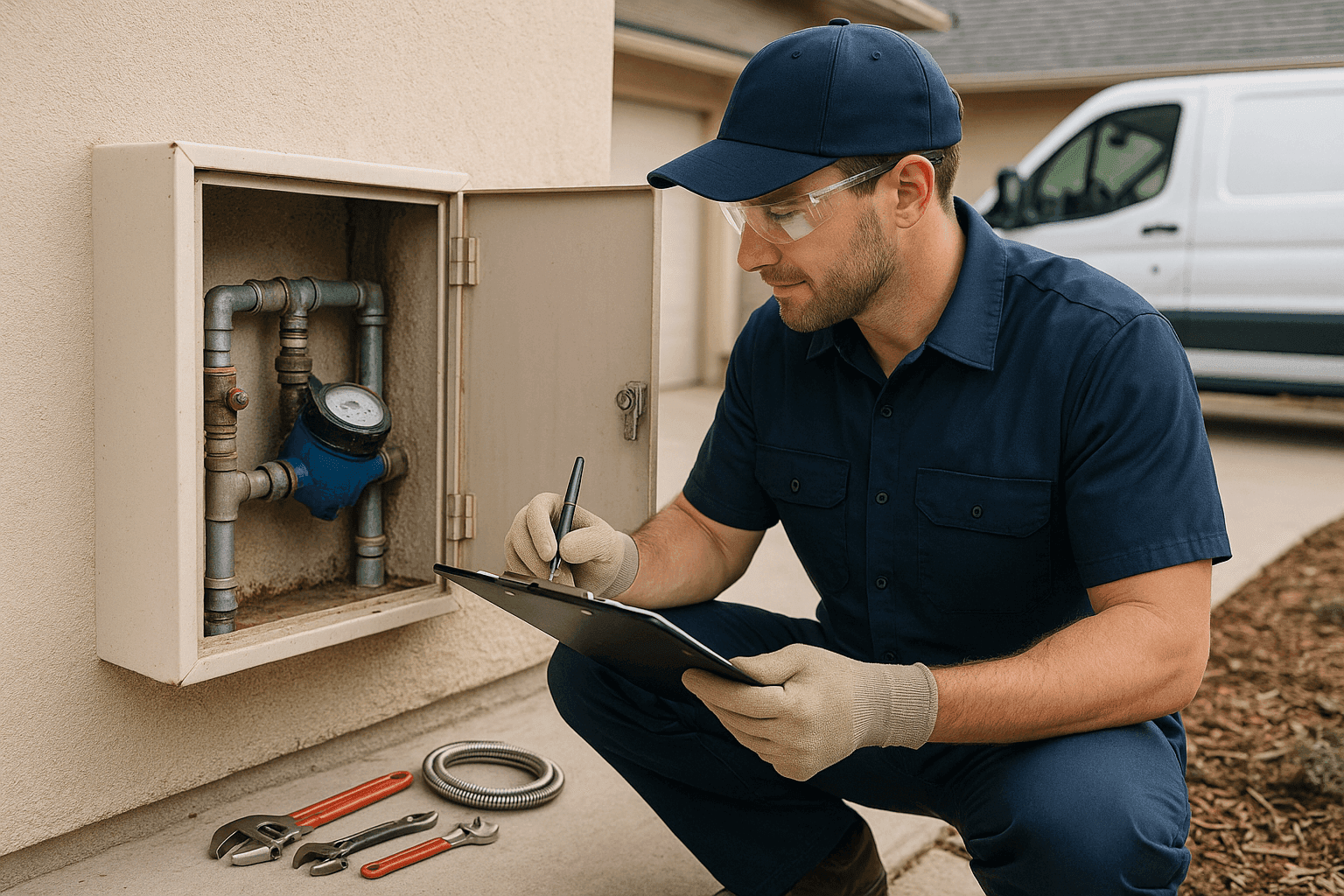
- Water meter: Turn off all water. If the meter keeps moving, there’s a leak somewhere.
Early Warning Signs
- Unexplained high water bills
- Moldy or musty odors
- Stains on ceilings or walls
- Warm spots on floors (could mean a slab leak)
The Environmental Protection Agency (EPA) recommends fixing leaks promptly to save water and prevent damage. Even a slow drip can waste thousands of gallons a year.
Seasonal Plumbing Maintenance
Seasons change—and so do plumbing risks. A little prep goes a long way.
Spring & Summer
- Check sump pumps before rainy season starts.
- Inspect outdoor faucets and hoses for winter damage.
- Flush water heaters to remove sediment and boost efficiency.
- Clean gutters and downspouts to direct water away from your foundation.
Fall & Winter
- Insulate exposed pipes in unheated areas to prevent freezing.
- Disconnect and drain outdoor hoses.
- Seal gaps around pipes entering the building.
- Test boiler and heating systems for safe, efficient operation.
Taking the time to “weatherproof” your plumbing not only prevents emergencies but also extends the life of your system.
Proper Use and Care of Fixtures 🚰
How you treat your plumbing every day matters. Bad habits can set you up for trouble.
Dos
- Use drain strainers to catch hair and food scraps.
- Run cold water while using the garbage disposal.
- Only flush toilet paper—nothing else.
- Fix running toilets or dripping taps promptly.
Don’ts
- Don’t pour grease or oil down the drain.
- Don’t use chemical drain cleaners—they can corrode pipes and harm the environment. The International Association of Plumbing and Mechanical Officials (IAPMO) recommends mechanical or enzymatic cleaning instead.
- Don’t hang heavy items on exposed pipes.
A little care keeps your pipes clear and your fixtures working as they should.
When to Call a Professional
Some problems are DIY-friendly. Others need a pro’s touch. Here’s how to tell the difference.
DIY-Friendly
- Minor clogs in sinks or tubs (try a plunger or drain snake)
- Replacing faucet washers or toilet flappers
- Tightening loose fixtures
Call Sarum Plumbing If You Notice:
- Water pooling where it shouldn’t be
- Persistent low water pressure
- Gurgling drains or sewage smells
- No hot water or strange noises from your water heater
- Sudden spikes in your water bill
- Gas smells or suspected leaks (leave the building and call immediately)
Plumbing codes and safety guidelines exist for a reason. Attempting repairs without the right tools or knowledge can make things worse—and put your safety at risk.
What Professionals Do On Arrival
When you call Sarum Plumbing for emergency plumbing, here’s what happens next:
- Rapid assessment: We identify the source of the problem—fast.
- Shutoff and containment: We stop water flow to limit damage.
- Diagnosis: Using specialized tools (like leak detectors and cameras), we pinpoint the issue.
- Repair or replacement: We fix the problem, whether it’s a burst pipe, clogged drain, or faulty water heater.
- Safety check: We inspect surrounding fixtures and pipes to ensure nothing else is at risk.
We follow current plumbing codes and best practices, drawing on years of hands-on experience.
Preventative Maintenance: Your Best Defense
An ounce of prevention is worth a gallon of cleanup. Here’s how to build a maintenance routine that works:
- Schedule annual professional inspections. We check for hidden leaks, test water pressure, and inspect all major appliances.
- Flush your water heater every 6–12 months to prevent sediment buildup.
- Test sump pumps before rainy seasons.
- Install backflow prevention devices to protect your water supply.
- Replace old pipes and hoses before they fail—especially if your property is more than 30 years old.
- Consider a water filtration system for cleaner, safer water and longer-lasting pipes.
Preventative maintenance isn’t just about avoiding emergencies. It saves money, protects property, and keeps your plumbing system healthy for years to come.
Costs & Time Factors
Plumbing emergencies can be costly—not just in repairs, but in water damage, lost business, and stress.
- Minor repairs (like fixing a leaky tap) often take less than an hour.
- Major issues (burst pipes, water heater failures) may require several hours or even multiple visits, especially if parts need to be ordered.
- Preventative maintenance is usually quick and affordable compared to emergency repairs.
Remember: The longer a problem goes unchecked, the more expensive it becomes. A small leak today can mean a big bill tomorrow.
When It’s an Emergency 🚨
Not sure if it’s urgent? Here are clear signs you need immediate help:
- Water is flowing uncontrollably and you can’t stop it.
- Sewage is backing up into your sinks, tubs, or toilets.
- You smell gas or hear hissing near gas lines.
- Your only toilet is clogged and unusable.
- There’s no water at all, or only cold water in winter.
In any of these situations, turn off your main water supply if it’s safe to do so. Then call Sarum Plumbing right away.
Frequently Asked Questions
How often should I have my plumbing inspected?
At least once a year. More often if your building is older or you’ve had previous issues.
What’s the best way to prevent drain clogs?
Use strainers, avoid flushing anything but toilet paper, and never pour grease down the drain.
Are chemical drain cleaners safe?
No. They can damage pipes and harm the environment. Use a plunger, drain snake, or call a professional.
Should I try to fix a leak myself?
Small drips from taps are usually safe to tackle. Anything more—especially leaks inside walls—should be handled by a licensed plumber.
Special Considerations for Homeowners and Small Businesses
Every property is unique. Homes often have aging pipes, tree roots, or DIY repairs from previous owners. Businesses may face higher usage, stricter health codes, or the need to keep operations running during repairs.
- For homeowners: Pay special attention to basements, crawl spaces, and attics. These hidden areas often hide leaks or pipe issues.
- For small businesses: Schedule maintenance outside of peak hours. Consider backflow testing and regular sewer line inspections to protect your customers and your bottom line.
Whether you’re managing a busy storefront or keeping your family comfortable at home, a little planning makes all the difference.
Plumbing emergencies don’t have to be inevitable. With smart habits, seasonal checks, and a trusted team on call, you can keep your pipes flowing and your property protected.
Call Sarum Plumbing now — or reach us anytime at 888-344-8562 .