Emergency Plumbing Guide: Steps to Take Before Help Arrives
Unexpected water on the floor. The toilet gurgling. Pipes banging like a drum line in the middle of the night. Whether you own a home or run a small business, plumbing emergencies strike at the worst moments.
When disaster hits, every minute counts. Knowing what to do before your emergency plumber arrives can make the difference between a quick fix and a costly repair. At Sarum Plumbing, we’ve seen it all—so let’s walk through your next steps together.
Recognizing a Plumbing Emergency 🚨
Not every drip is a disaster. But some signs mean it’s time to act—fast.
- Water flooding your floors—from a burst pipe, failed water heater, or overflowing toilet.
- Sudden loss of water pressure—sometimes linked to leaks or main line breaks.
- No hot water in winter, especially at a business or in a home with infants or elderly residents.
- Sewage smells or backup—a clear signal of a sewer line issue.
- Water stains on ceilings or walls—hidden leaks are sneaky but destructive.
- Unusual noises—banging, rattling, or hissing from pipes or heaters.
If you spot any of these, don’t wait. Plumbing issues can escalate quickly, turning a small leak into a major headache. Residential and commercial properties are both at risk.
Immediate Actions for Major Leaks, Burst Pipes, or Clogged Drains
Water moves like a freight train. Here’s how to get ahead of it before Sarum Plumbing arrives:
How to Shut Off Water
Think of your plumbing like a garden hose. Cut off the source, and the flood stops.
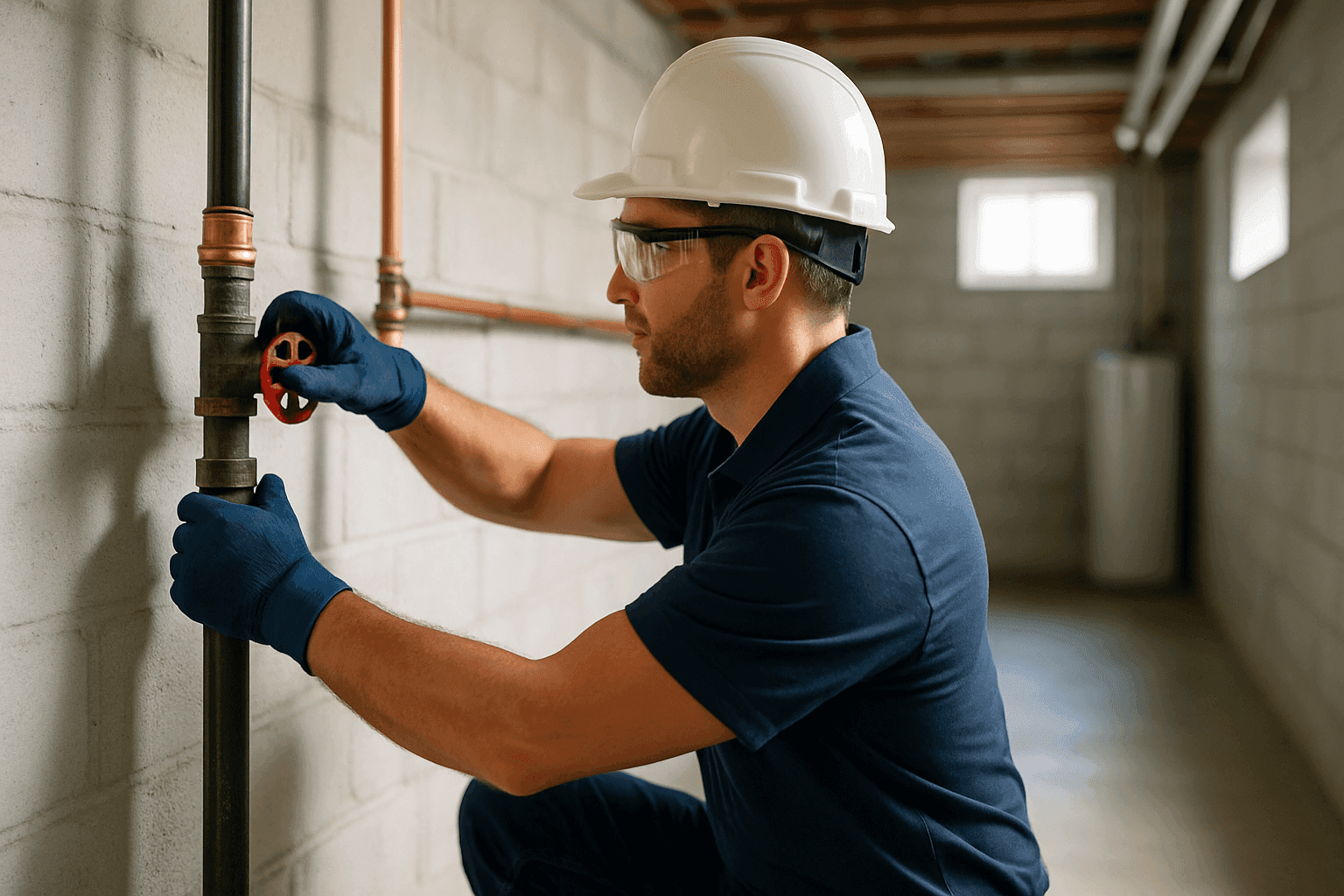
- Find your main shutoff valve—usually near the water meter, basement wall, crawlspace, or utility closet.
- Turn clockwise (righty-tighty) until the flow stops. You may need a wrench.
- For toilets or sinks, turn the small valve under the fixture.
- In businesses, look for labeled emergency shutoff valves near main entries or mechanical rooms.
If you can’t find the valve or it’s stuck, let your plumber know right away.
Protecting Your Home or Business from Water Damage
A few quick moves can save you thousands in repairs:
- Move electronics, documents, and valuables to higher ground.
- Place towels or buckets under active drips.
- Unplug appliances if safe to do so—water and electricity don’t mix.
- Open doors and windows to help dry things out, if weather allows.
- Avoid standing water if you suspect electrical wires may be submerged.
For businesses, secure inventory and critical paperwork. In homes, protect sentimental items—photos, keepsakes, and important records.
Emergency Plumbing Checklist
Keep this list handy for the next time trouble strikes:
- [ ] Stay calm. Panic never solved a pipe burst.
- [ ] Shut off water at the main valve or fixture.
- [ ] Cut power if water is near electrical outlets.
- [ ] Move valuables and electronics out of harm’s way.
- [ ] Mop or contain water with towels and buckets.
- [ ] Take photos for insurance, if safe.
- [ ] Call Sarum Plumbing—describe the problem clearly.
- [ ] Keep the area clear for technicians.
- [ ] Don’t try risky DIY repairs on gas or sewer lines.
What Information to Give Your Plumber
The more details you share, the faster we can help. When you call Sarum Plumbing, be ready to describe:
- Where the water is coming from—kitchen, bathroom, basement, outside wall.
- How fast the leak is flowing—steady stream, slow drip, sudden burst.
- Any unusual sounds or smells—gurgling, banging, sewer odors, gas smell.
- What steps you’ve already taken—shutoff, moved items, turned off power.
- Access details—is the affected area locked, or is there a dog on site?
- Special requirements—for businesses, note if restrooms or kitchens are closed for customers.
Clear information helps Sarum Plumbing arrive ready to solve the problem.
Preventing Further Issues While You Wait
Think of your response as putting out the first sparks in a fire.
- Don’t use plumbing fixtures until your plumber gives the green light.
- Avoid chemical drain cleaners—they can make clogs worse and damage pipes.
- Keep people and pets away from the affected area.
- Document everything for your insurance—photos, videos, and notes.
- Monitor for changes—if the leak worsens or you smell gas, update your plumber immediately.
When to Call Emergency Plumbing Services
Some situations just can’t wait:
- Burst pipes—water pouring out, structural risk.
- Sewer backups—health hazard, business closure risk.
- No water at all—especially for healthcare, restaurants, or homes with vulnerable residents.
- Gas leaks—leave the building and call your utility provider, then Sarum Plumbing for gas line repair.
If you’re searching for “emergency plumbing near me” or need urgent pipe installation near you, don’t delay. Fast action limits damage and costs.
DIY Fixes vs. Calling a Pro
It’s tempting to grab a wrench and go. But plumbing is a maze, and the wrong move can make things worse.
Safe DIY steps:
- Shutting off water.
- Cleaning up standing water.
- Moving valuables.
- Taking photos.
Leave it to the pros:
- Anything involving gas lines or sewer pipes.
- Major leaks inside walls or ceilings.
- Boiler, water heater, or sump pump repairs.
- Persistent clogs that resist a plunger.
A quick fix could turn into a bigger problem—and even violate local building codes (see the International Plumbing Code for standards).
What Pros Do On Arrival
Here’s what to expect when Sarum Plumbing arrives:
- Assessment: We’ll inspect the source and extent of the problem.
- Isolation: Shut down only what’s needed—sometimes we can keep parts of your house or business running.
- Repair or temporary fix: Stop leaks, unclog drains, or stabilize pipes.
- Safety checks: For gas, sewer, or electrical hazards.
- Cleanup guidance: Advice on drying, dehumidifying, and when to call restoration.
We bring specialized tools—pipe cameras, leak detectors, thermal imagers. And we stay until the immediate threat is handled.
Preventing Plumbing Emergencies: Tips for Homes & Businesses
An ounce of prevention is worth a gallon of clean-up.
- Schedule regular inspections—especially before winter or busy business seasons.
- Install water alarms in basements or near water heaters.
- Replace old pipes—especially in older homes or buildings.
- Insulate exposed pipes to prevent freezing.
- Test shutoff valves yearly.
- Backflow testing—required for many businesses and highly recommended for homes.
- Consider water filtration systems to reduce mineral build-up.
Check your property for slow drains, odd noises, or recurring leaks. These can be early warning signs.
Costs and Time Factors: What to Expect
Plumbing emergencies rarely follow a 9-to-5 schedule. Costs and repair times can vary depending on:
- Severity of the problem: A small leak is cheaper than a burst main.
- Location: Hard-to-reach pipes mean more labor.
- Type of fix: Temporary patch vs. full replacement.
- After-hours or holidays: Emergency rates may apply.
- Restoration needs: Water damage remediation is separate.
Most urgent repairs take 1–4 hours. More complex pipe installation or sewer line repair may take longer. Always ask for an estimate once the problem is inspected.
Local and Seasonal Considerations
Plumbing emergencies don’t care about the calendar, but seasons matter:
- Winter: Frozen pipes and water heater breakdowns rise.
- Spring: Heavy rains bring sewer backups and sump pump failures.
- Older buildings: Original plumbing may need repiping—watch for rusty water or low pressure.
- Commercial kitchens: Grease clogs and broken disposals often hit during peak business.
Stay alert to your building’s quirks. Regular maintenance (per local code) helps reduce risk.
Emergency Plumbing FAQ
What if I can’t find my main shutoff valve?
Check near the water meter, basement, or outside wall. In commercial buildings, look in mechanical or utility rooms. If you can’t locate it, call your plumber for help.
Is it safe to use my bathroom if I have a leak?
If the leak is isolated (like a kitchen sink), you may be able to use other fixtures. If in doubt—or if water pressure drops everywhere—wait for your plumber’s advice.
I smell gas—what should I do?
Leave the building immediately. Call your utility provider, then Sarum Plumbing for gas line inspection and repair.
How soon will a plumber arrive during an emergency?
We aim to respond as quickly as possible, often within an hour—depending on call volume and location. Always let us know if the situation worsens while you wait.
Plumbing emergencies are stressful, but you’re not alone. Quick action and the right information can protect your property and your peace of mind. For 24/7 help with pipe installation near you, leak repair, sewer line inspection, and more, Sarum Plumbing is ready.
Call Sarum Plumbing now — or reach us anytime at 888-344-8562 .