How to Spot Hidden Plumbing Leaks in Your Home
Have you ever noticed a faint musty smell or a sudden spike in your water bill? You’re not alone. Many property owners—both at home and at work—face hidden plumbing leaks that go unnoticed until disaster strikes. Small leaks don’t always announce themselves with a dramatic flood. Sometimes, they whisper in drips behind walls, under floors, or above ceiling tiles. Left unchecked, these leaks can quietly erode your building’s structure, rack up hefty repair bills, and even lead to health concerns from mold.
At Sarum Plumbing, we handle emergencies day and night, and we’ve seen how early leak detection saves panic, money, and property. Let’s walk through how you can spot the clues, what you can do yourself, and when it’s time to call the professionals.
Common Signs of Hidden Leaks 🚨
Leaks have a way of hiding in plain sight. They’re like uninvited guests who leave behind muddy footprints. Here’s what you might notice before you ever see a drop of water:
- Unexplained spikes in your water bill: If your usage hasn’t changed but your costs have, water could be escaping somewhere.
- Musty or earthy odors: Persistent dampness can mean water is pooling where it shouldn’t.
- Stained, bubbling, or peeling paint or wallpaper: Water trapped in walls loosens adhesives and seeps through.
- Sagging ceilings or warped floors: These signals often point to leaks overhead or underneath.
- Visible mold or mildew, especially in unusual places: Bathrooms are obvious, but mold in bedrooms or offices is a red flag.
- The sound of running or dripping water when fixtures are turned off: Your pipes may be talking to you.
- Hot spots on floors (for hot water leaks): Especially common in slab foundations.
These symptoms don’t always mean a catastrophic break, but they’re worth investigating—fast.
Tools and DIY Methods for Leak Detection
If you suspect something is amiss, a little detective work can make all the difference. You don’t need fancy gear to uncover the most common leaks.
- The Water Meter Test: Turn off all water in the building. Watch your meter for 30 minutes. If it keeps moving, you have a leak.
- Food Coloring Trick: For toilets, add food coloring to the tank. If color appears in the bowl without flushing, the flapper may be leaking.
- Check Under Sinks and Cabinets: Shine a flashlight for wetness, corrosion, or mineral buildup.
- Inspect Appliances: Look for puddles or moisture near water heaters, dishwashers, refrigerators, and washing machines.
- Listen Closely: Sometimes at night, the house is quiet enough to hear a hidden drip behind the wall.
Walls, Floors, Fixtures, and Ceilings
Leaks can travel in surprising ways. Water doesn’t always take the straightest path. Here’s what to check:
- Walls: Look for discoloration, soft spots, or bulges. Gently press to see if drywall feels spongy.
- Floors: Especially in bathrooms and kitchens, warped laminate or loose tiles may signal water below.
- Fixtures: Even a slow drip from a faucet or connection can add up to gallons lost each month.
- Ceilings: Stains or sagging often mean a leak from an upper floor, roof, or hidden pipe.
When to Call a Professional
DIY checks are a great start. But some leaks are like icebergs—most of the danger is hidden below the surface. If you notice:
- Persistent signs of moisture with no clear source.
- Evidence of water damage spreading or worsening.
- Mold growth in areas you can’t access or clean.
- Water pressure changes throughout the building.
- Recurring leaks after attempted fixes.
It’s time to call in a licensed plumber. Emergency plumbing services can prevent further damage and help you meet safety codes for both homes and businesses.
Advanced Leak Detection Technologies
At Sarum Plumbing, we use more than just a trained eye. Here’s a peek at what professionals bring to the job:
- Acoustic listening devices: Pinpoint leaks by tracking the sound of escaping water—even through concrete.
- Thermal imaging cameras: Reveal temperature changes caused by hidden moisture in walls or floors.
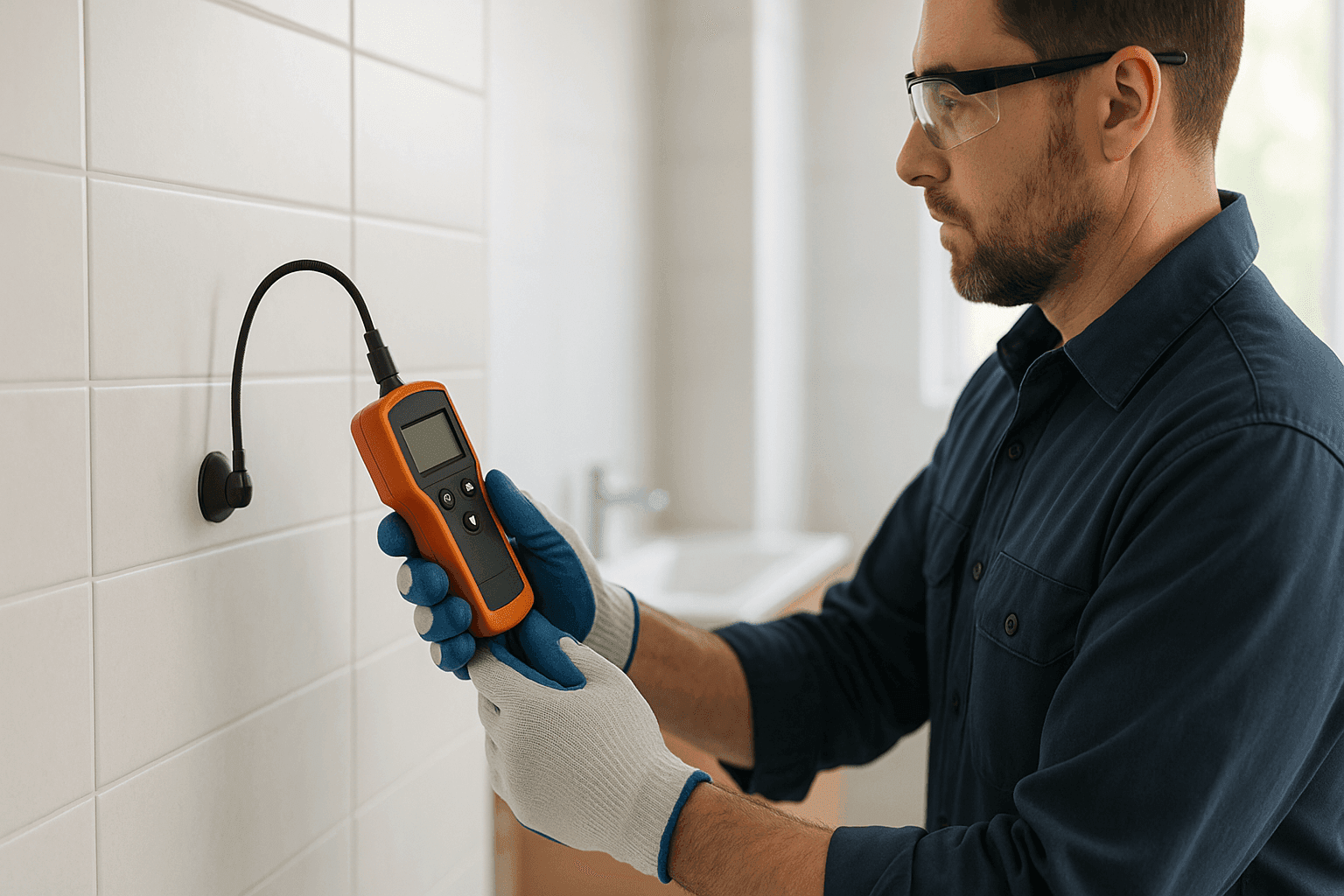
- Moisture meters: Quantify dampness in building materials, locating leaks invisible to the naked eye.
- Pipe inspection cameras: Explore inside pipes and sewer lines with tiny cameras, finding blockages and cracks.
These tools let us find problems fast, with minimal disruption to your property.
Safety Checklist: Know Before You Search
Stay safe before you go hunting for leaks, especially in commercial buildings or older homes:
- Turn off electricity to affected areas if walls or floors are wet.
- Wear gloves and a mask when dealing with mold or musty water.
- Don’t touch wet outlets, switches, or wiring.
- Know where your main water shutoff valve is located.
- Call a professional if you smell gas, notice sewage odors, or see water near electrical panels.
Print this checklist and keep it with your emergency contacts.
DIY Leak Repairs vs. Professional Help
Some small leaks are simple: a worn washer, a loose fitting, or a little plumber’s tape. If you’re comfortable, you can tackle:
- Tightening visible pipe joints under sinks.
- Replacing faucet washers or toilet flappers.
- Cleaning out P-traps (the U-shaped pipe under your sink).
But for anything involving walls, floors, gas lines, or major appliances—don’t risk it. Water damage can double in cost with each day it’s left unchecked. Insurance claims might be denied if repairs aren’t handled properly.
What Pros Do On Arrival
When a Sarum Plumbing technician arrives, here’s what you can expect:
- Careful assessment of symptoms you’ve noticed.
- Use of specialized tools to confirm and locate leaks.
- Quick shutoff of water or gas if needed for safety.
- Professional pipe repair, repiping, or fixture replacement as needed.
- Full documentation for insurance and code compliance.
It’s about solving the problem, not just patching the symptom.
Prevention & Maintenance
The best leak is the one that never happens. Regular maintenance helps you avoid most emergencies. Here’s how:
- Schedule annual inspections for all visible plumbing.
- Ask about water pressure checks—high pressure can stress pipes.
- Replace aging pipes and fixtures before they fail.
- Insulate pipes in crawl spaces or outdoors to prevent freezing.
- Install water alarms in basements, laundry rooms, and near water heaters.
Organizations like the International Association of Plumbing and Mechanical Officials (IAPMO) recommend regular checks and code-compliant repairs to protect property and health.
Costs & Time Factors
Worried about the bill or downtime? Here’s what to expect:
- Detection: Simple leaks may be found in under an hour. More complex cases (slab leaks, commercial pipe runs) take longer and may require specialized equipment.
- Repairs: Minor fixes (toilet flapper, faucet washers) can be same-day. Larger jobs—like repiping or sewer line repair—could take days, depending on access and material.
- Costs: While simple fixes are usually affordable, costs rise with the complexity, location, and urgency of the job. Water damage remediation can multiply expenses if the leak is left too long.
Acting early saves money—every time.
When It’s an Emergency
Some leaks are more than an inconvenience. Call emergency plumbing services immediately if you notice:
- Rapid flooding or water pooling anywhere in your building.
- Sewage backing up into sinks, tubs, or basements.
- Water spraying from pipes or fixtures.
- Gas smells or hissing near gas lines (leave the building and call for help).
Time is critical. The sooner the response, the less damage and downtime you’ll face.
Frequently Asked Questions (FAQ)
Q: How do I tell if a leak is inside a wall or under a floor?
A: Look for dampness, stains, or soft spots. If you hear water running with everything off, or see your meter moving, a hidden leak is likely.
Q: Can I use commercial leak detectors from the hardware store?
A: Simple detectors can help, but they’re not as precise as professional acoustic or thermal tools. They’re good for alerting you to moisture, not for pinpointing the source.
Q: Will insurance cover hidden leak damage?
A: Policies vary. Most require you to act quickly and use licensed professionals for repairs. Document everything and call your insurer as soon as you notice a problem.
Q: Is a small drip really a big deal?
A: Over time, even a slow drip can waste gallons of water, damage framing, and grow mold. Fix leaks early to save money and avoid headaches.
Local & Seasonal Considerations
Every region faces unique challenges. In cold climates, pipes freeze and burst. In older buildings, aging pipes may corrode or shift with temperature changes. During rainy seasons, sewer lines and sump pumps face extra pressure. Business owners should also check plumbing before seasonal closures or after heavy use periods.
Regular preventative maintenance and rapid action—whether you’re a homeowner or manage a commercial property—make all the difference.
Printable Leak Detection Checklist
- [ ] Check your water meter for unexplained movement.
- [ ] Test toilets with food coloring.
- [ ] Inspect under sinks, behind appliances, and around water heaters.
- [ ] Look for stains, bubbling, or soft spots on walls and ceilings.
- [ ] Listen for drips or running water when pipes are not in use.
- [ ] Monitor water bills for sudden increases.
- [ ] Smell for musty or earthy odors in unexpected places.
- [ ] Know where your main shutoff valve is located.
- [ ] Schedule routine professional inspections.
Keep this checklist handy for regular walk-throughs!
Hidden plumbing leaks don’t have to catch you off guard. Whether at home or in your business, early detection keeps water where it belongs—and your property safe and dry.
Call Sarum Plumbing now — or reach us anytime at 888-344-8562 .