Hiring a Plumber: Questions to Ask and Red Flags to Avoid
When the pipes burst, or water won’t stop running, the clock starts ticking fast. Panic rises. But the right plumber brings calm—and real solutions. Choosing the wrong one can mean wasted money, more damage, even safety risks.
At Sarum Plumbing, we know the stakes are high. Residential or commercial, emergency plumbing or a simple pipe installation near you, it pays to ask good questions first. Here’s how to do it right.
Why Hiring the Right Plumber Matters 🛠️
Plumbing is like the arteries of your building—when something goes wrong, your entire home or business can suffer. A leaky pipe isn’t just annoying; it can lead to hidden water damage, mold, or even structural problems. An unqualified plumber is like letting a stranger perform surgery without a license.
You wouldn’t hand your car keys to someone who’s never driven. The same goes for your plumbing. From water heater repair to gas line installation, the right choice saves you headaches, money, and hassle down the road.
Top Questions to Ask Before You Hire
Imagine you’re interviewing a babysitter for your home—trust is everything. Treat hiring a plumber the same way. Ask these:
- Are you licensed in this state? (Ask for their number and verify it.)
- Do you carry current insurance, including liability and worker’s comp?
- How long have you been in business?
- What experience do you have with this specific job (e.g., repiping, emergency plumbing)?
- Can you provide references from recent customers?
- What is your process if a job takes longer or costs more than expected?
- Who will actually be coming to my home or business?
- Do you offer a clear, written estimate before work begins?
- What payment options do you accept?
- Will you pull required permits and follow local codes?
Jot these down. Print them. Keep them handy for the first call.
Credentials and Certifications
Plumbing licenses aren’t just pieces of paper—they’re proof of training and commitment to safety. In most states, plumbers must pass exams and meet ongoing education requirements. You can check licensing agencies like your state Department of Labor or local government website.
Insurance matters too. Liability insurance protects you if something goes wrong. Worker’s compensation covers injuries on your property. If a plumber can’t show these, walk away.
Look for signs of professionalism:
- Uniforms and marked vehicles
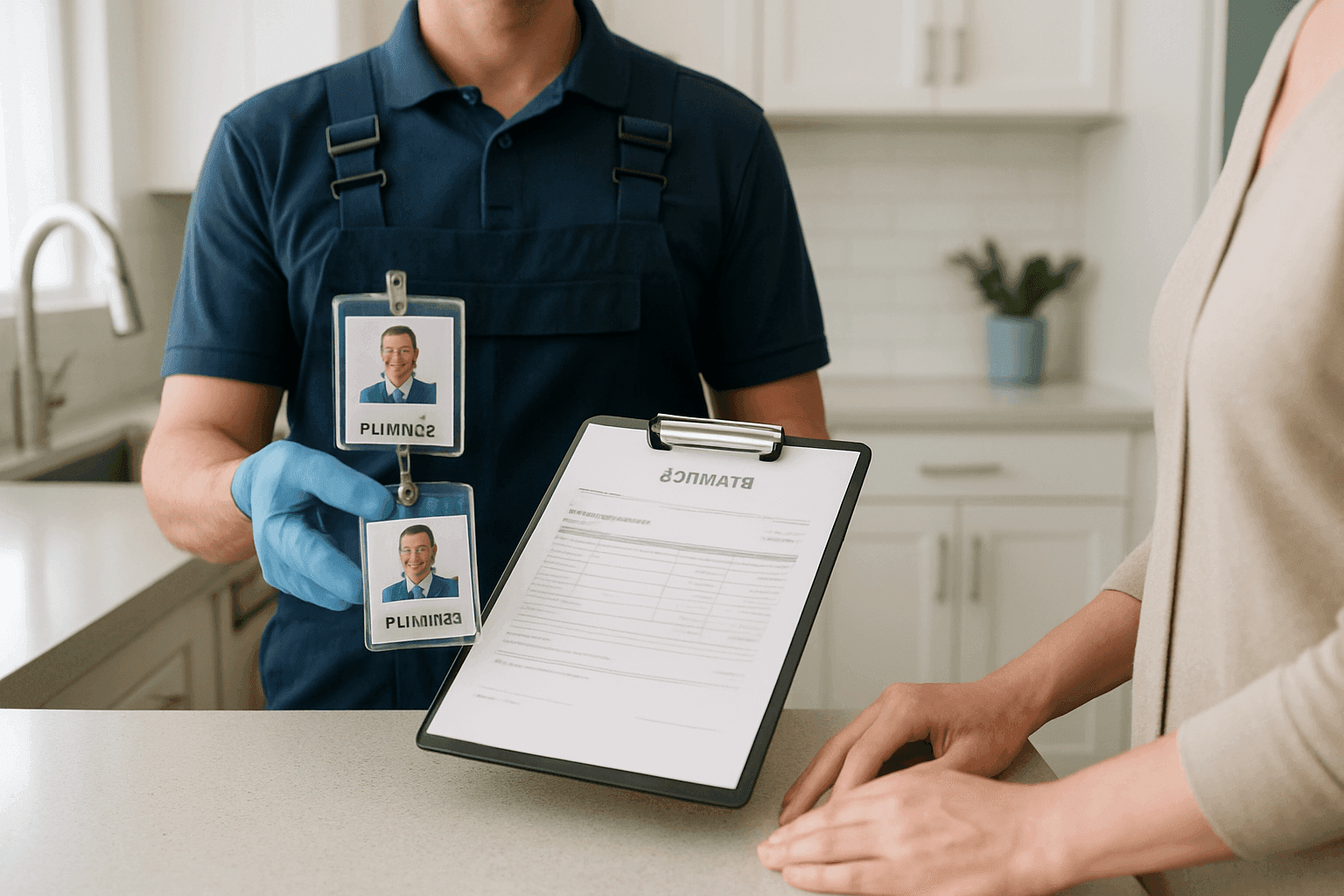
- Clear identification badges
- Membership in trade organizations (like the Plumbing-Heating-Cooling Contractors Association)
- Up-to-date certifications for specialties like gas line installation or backflow prevention
When in doubt, ask to see proof. A reputable plumber will never hesitate.
Red Flags and Scam Warnings 🚩
Some warning signs are as clear as a flooded basement. Others are subtle. Watch for these:
- No license or insurance—or excuses about why you don’t need them.
- Unusually low bids that seem too good to be true.
- Cash-only demands or requests for large upfront payments.
- Pressure tactics to make a decision immediately.
- No written estimate or vague scope of work.
- Lack of a local address or business presence.
- Reluctance to explain permits or code requirements.
- No reviews or references when you ask.
Scams can happen to anyone. The right questions protect you.
Getting a Written Estimate
A handshake isn’t enough. Always get it in writing. A professional estimate should include:
- The plumber’s full business name and contact information
- Detailed description of the work (pipe repair, sewer line inspection, fixture installation, etc.)
- Itemized list of labor and materials
- Start and completion dates (or timeframes)
- Payment schedule and terms
- Permits or inspections required
Compare estimates if you get more than one. Look for clear descriptions, not just numbers.
Printable Plumber Hiring Checklist
Before you pick up the phone, print this checklist. It’s your shield against costly mistakes.
Plumber Hiring Checklist
- [ ] Licensed in your state (verify number)
- [ ] Proof of current insurance
- [ ] Relevant experience for your specific job
- [ ] Positive references from recent customers
- [ ] Clear, written estimate provided
- [ ] Will obtain necessary permits
- [ ] Professional appearance and identification
- [ ] Explains process and answers all questions
- [ ] No pressure or scare tactics
- [ ] Payment terms explained up front
Stick this on your fridge or office bulletin board. Use it every time.
Licensing, Insurance, and “Trust” Signals
Licensing isn’t just bureaucracy. It means your plumber has passed state exams and follows safety codes. Insurance means you’re not left holding the bag if something goes wrong.
Look for:
- Visible license numbers on vehicles or business cards
- Insurance certificates provided without hesitation
- Professional demeanor—on time, courteous, and willing to explain
You can check a plumber’s license with your state board or local plumbing authority. For example, the International Association of Plumbing and Mechanical Officials (IAPMO) sets codes adopted across North America.
Never be afraid to double-check credentials. Your safety and property depend on it.
When It’s an Emergency
In a plumbing emergency, stress can cloud your judgment. Water pouring from a ceiling. Gas smell in the kitchen. Don’t panic—call a licensed plumber with emergency plumbing experience.
They should:
- Arrive quickly and assess the situation calmly
- Explain immediate steps to prevent further damage
- Communicate clearly about next actions, costs, and risks
Don’t let urgency force you into a bad decision. Even in emergencies, stick to your checklist. The right pro keeps a cool head—so you can, too.
Practical Tips for Every Property Owner
- Save the number of a trusted plumber in your phone before trouble hits.
- Know where your main water shutoff is. Practice turning it off.
- Schedule annual preventative maintenance—don’t wait for leaks.
- If you smell gas, evacuate and call emergency services before the plumber.
Keep your plumbing in shape with regular care—like changing the oil in your car. Prevention always costs less than repairs.
Reference Points for Peace of Mind
- State and local licensing boards (check requirements for your area)
- National codes: Uniform Plumbing Code (UPC), International Plumbing Code (IPC)
- Occupational Safety and Health Administration (OSHA) for workplace safety standards
- Trade organizations: Plumbing-Heating-Cooling Contractors Association
Even if your job is as simple as unclogging a toilet or as complex as sewer line repair, these resources matter.
FAQ: Common Plumbing Hiring Questions
Q: Can I do plumbing work myself?
A: Simple fixes like a clogged drain, maybe. But anything involving gas, sewer, or major water lines should be left to licensed pros. You could void insurance or even break the law by doing it yourself.
Q: What if my plumber finds extra problems during the job?
A: A good plumber will always explain new findings before doing extra work—and get your approval in writing.
Q: Are permits really necessary?
A: Yes. Permits ensure work meets local codes and keeps you protected if you sell or insure your home.
Q: How do I know if it’s an emergency?
A: If you’re at risk of flooding, loss of heat, gas leaks, or sewage backup—call for emergency plumbing help right away.
Closing Thoughts
Hiring a plumber isn’t just a transaction. It’s trusting someone with your home or business. Ask questions. Watch for red flags. Insist on credentials. Sarum Plumbing believes in transparency, skill, and safety—every time.
Call Sarum Plumbing now — or reach us anytime at 888-344-8562 .