Choosing the Right Water Filtration System for Your Property
Are you tired of chalky water stains on your faucet? Or maybe you’re worried about what’s really in your tap water. Whether you’re running a busy café, managing an office, or making your home a safer place for your family, clean water matters—right now, more than ever.
At Sarum Plumbing, we know that choosing a water filtration system can feel overwhelming. With so many options, how do you know what will actually work for your needs? Let’s break it down together, with straightforward guidance and practical advice.
Why Water Filtration Matters 💧
Water is the backbone of your property—literally flowing through every pipe and faucet. But not all water is created equal. Contaminants, minerals, and even old pipes can affect everything from taste to health.
For businesses, poor water quality can turn away customers or damage valuable equipment. At home, it’s your family’s health on the line. That’s where a good water filtration system steps in. It’s like a security guard for your water, quietly working behind the scenes.
A Few Common Water Quality Worries
- Chlorine or chemical taste and odor
- Hard water stains and limescale buildup
- Sediment, rust, or cloudy water
- Potential bacteria or lead (especially in older buildings)
- Compromised taste impacting food or beverage quality
Clean water isn’t just a luxury—it’s a necessity. The Environmental Protection Agency (EPA) and local building codes set out clear standards for water safety in both residential and commercial spaces. Meeting those standards isn’t just smart; it’s essential.
Types of Water Filtration Systems
There is no one-size-fits-all solution. Your choice depends on your goals, the size of your property, and local water conditions.
Whole-House Filtration
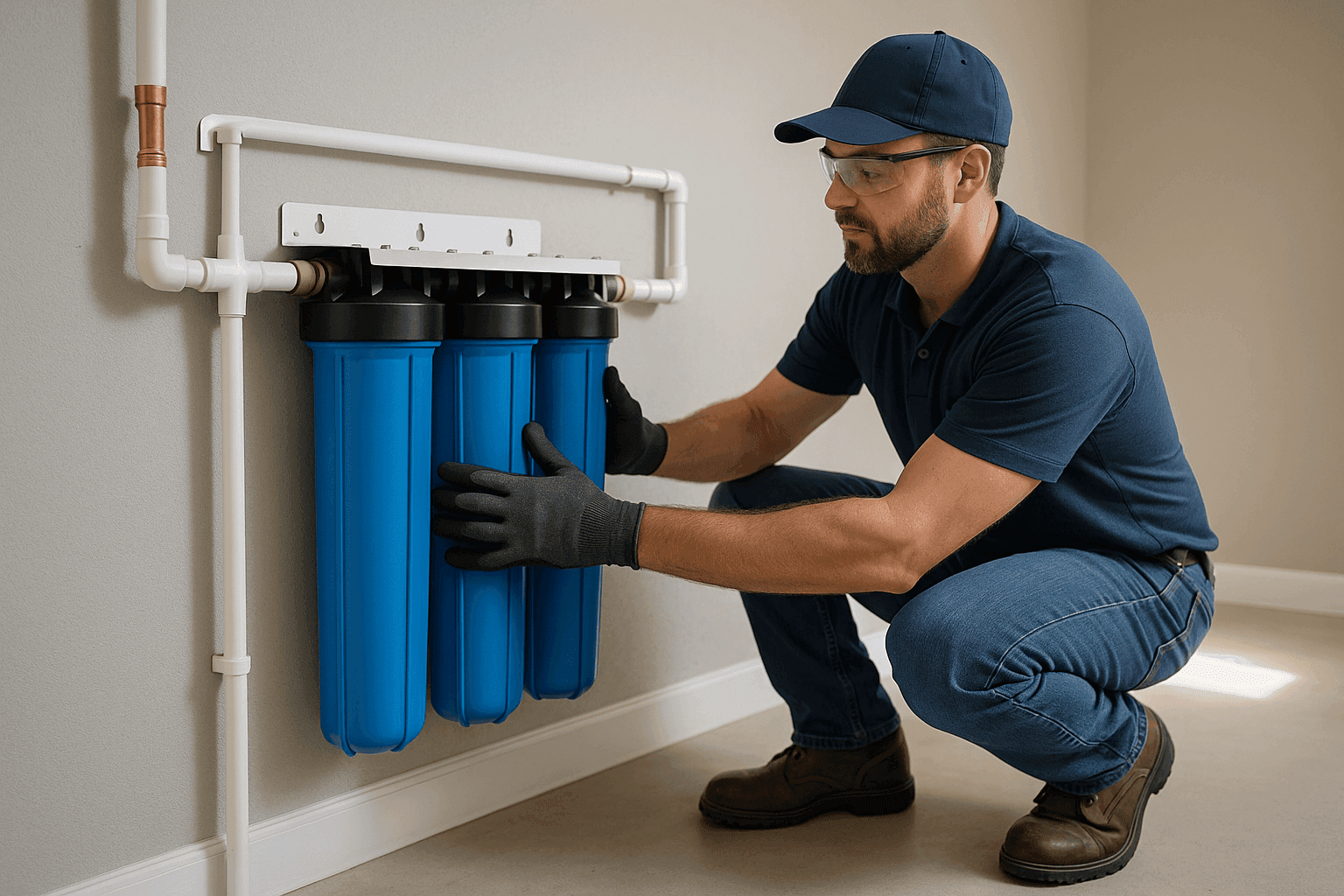
Think of whole-house systems as the “main gate” for your water supply. These units treat all the water entering your property, ensuring every tap, shower, and appliance gets filtered water. They’re great for:
- Larger homes
- Multi-unit buildings
- Businesses with extensive plumbing systems
Common styles include tank-based filters, carbon filters, and water softeners. Some combine several elements for multi-stage filtration.
Under-Sink & Point-of-Use Filters
Under-sink systems target a specific faucet—usually the kitchen. They’re like hiring a bodyguard for your drinking water. These filters can be activated carbon, reverse osmosis, or cartridge style.
- Ideal for apartments and smaller homes
- Good for targeted needs (e.g., drinking or cooking water)
- Faster installation and lower upfront cost
Commercial & Specialized Systems
If you run a restaurant, hotel, or healthcare facility, your needs go beyond the basics. Commercial-grade filtration can handle high volumes and unique contaminants.
- Large capacity for busy operations
- Customizable—can combine UV, carbon, sediment, and softening
- Often integrated with ice machines, boilers, and dishwashers
Local safety codes (such as those from the International Plumbing Code or your city’s health department) may dictate what system you need.
Matching Systems to Your Needs
No two properties are alike. Start with a little detective work.
Assess Your Water
- Get a water quality report. Your municipality provides annual reports. For private wells, get your water tested (the CDC offers guidelines).
- Identify key concerns. Is your water hard? Does it taste odd? Are there known lead pipes or frequent boil advisories?
Consider Usage Patterns
- Households: How many people live there? How many bathrooms?
- Businesses: Do you serve food or drinks? Need filtered ice or coffee water?
- Special risks: Infants, elderly, or immune-compromised individuals may need added protection.
Factor in Installation Space
- Whole-house: Needs basement or utility space.
- Under-sink: Requires cabinet room and easy access.
- Commercial: May need dedicated equipment rooms.
Think About Flow Rate
A busy café’s needs far outpace a single-family home. Undersized filters lead to pressure drops or reduced effectiveness.
Quick Tips
- For most homes, a standard whole-house filter plus a kitchen under-sink filter covers the bases.
- Commercial businesses should consult plumbing professionals for a custom assessment—especially if emergency plumbing or code compliance is a concern.
Professional vs DIY Installation 🛠️
Installing a water filtration system isn’t always as simple as screwing in a lightbulb. It’s more like playing Tetris with your plumbing.
The DIY Route
- Pros: Lower upfront cost, flexible timing, satisfying for handy folks.
- Cons: Risk of leaks, code violations, or voided warranties. Complex systems (like whole-house or commercial) require pipe installation near you and sometimes permits.
DIY works best for simple under-sink or countertop filters. For anything tied into your main water line, think twice.
When to Call a Professional
- Whole-house or commercial systems: These tie into your main water line and may involve shutting off water, soldering, or rerouting pipes.
- Gas line or boiler integration: Only licensed plumbers should touch these due to safety and code compliance.
- Backflow prevention: Many local codes mandate professional installation and testing to prevent contamination.
Professionals ensure proper sizing, secure connections, and compliance with building codes like the Uniform Plumbing Code (UPC). They can also spot potential issues—like aging pipes or water pressure problems—before they become emergencies.
Maintenance Requirements
Even the best filter is only as good as its upkeep. Think of maintenance like changing the oil in your car. Ignore it, and you’re asking for trouble.
What’s Typically Required
- Cartridge replacement: Most filters need new cartridges every 3–12 months.
- System cleaning: Some units require annual cleaning or sanitization.
- Water pressure checks: Regular monitoring helps spot clogs before they affect flow.
- Backflow testing: For properties with backflow preventers, annual professional testing is typically required by code.
Red Flags to Watch For
- Water tastes or smells off
- Noticeable drop in water pressure
- Visible sediment in filtered water
- Filter change indicator lights up
Ignoring maintenance can lead to clogged pipes, leaks, or even emergency plumbing calls. Stay proactive and keep a calendar reminder.
Quick Safety Checklist
- Check that your chosen system is NSF/ANSI certified for your target contaminants.
- Ensure installation follows local plumbing codes—especially for backflow prevention and gas line safety.
- For commercial properties, keep records of filter changes and maintenance.
- Never install a water filter on a hot water line unless it’s rated for high temperatures.
- Test water after installation to confirm performance.
Professional vs DIY: How Do You Decide?
It comes down to complexity, safety, and peace of mind. Simple under-sink systems? Most confident DIYers can handle those. Whole-house or commercial installations involving pipe cutting or gas lines? Call a licensed plumber.
Remember: improper installation isn’t just a hassle. It can risk property damage, health, or code violations. Emergency plumbing teams like Sarum Plumbing handle complex jobs so you don’t have to gamble.
Maintenance: Routine Tasks and Reminders
- Change filter cartridges as recommended (usually 3–12 months)
- Schedule annual system checks—especially for whole-house and commercial filters
- Monitor for leaks, odd tastes, or pressure changes
- For businesses: keep a maintenance log for code compliance
Stay ahead of problems. Regular care keeps your water clean and your system running smoothly.
Costs & Time Factors
Every property is unique, but here’s what often affects your budget and schedule:
- System type: Under-sink filters are more affordable and quick to install. Whole-house and commercial systems cost more up front but offer broader coverage.
- Installation complexity: DIY may save money but can take longer. Professional installation is faster and safer for complex jobs.
- Filter replacement: Ongoing costs depend on model and water quality.
- Unexpected issues: Old pipes, high water pressure, or hidden leaks can add time and expenses.
A typical under-sink system takes an hour or two to install. Whole-house or commercial jobs could run a half-day or more, especially if repiping or inspection reveals extra needs.
When It’s an Emergency
Sometimes, water filtration isn’t just about taste—it’s about safety. If you notice:
- Sudden loss of water pressure
- Discolored or foul-smelling water
- Unexplained leaks near your filter or pipes
Don’t wait. These can signal burst pipes, backflow issues, or system failures. Emergency plumbing teams are available 24/7 for urgent repairs, pipe installation near you, or leak detection. Your water supply is too important to ignore.
FAQ
How do I know which contaminants are in my water?
Start with your local water utility’s annual report. For private wells or specific concerns, use an accredited lab for water testing.
Do I need a whole-house system if I only care about drinking water?
Not necessarily. An under-sink or countertop filter may be enough. But if you want to protect appliances and plumbing, whole-house systems are worth considering.
Can I combine different types of filters?
Yes. Many properties use a whole-house system for general filtration plus a point-of-use filter for drinking water.
How often should commercial systems be serviced?
Follow the manufacturer’s guidelines and local codes—often quarterly or semi-annual checks are recommended for high-usage environments.
Local & Seasonal Considerations 🏡
- In areas with seasonal water issues (like spring runoff or drought), test your water more frequently.
- Older neighborhoods may have legacy pipes—consider lead or sediment filters.
- Commercial kitchens must follow local health department guidelines—keep documentation handy for inspections.
Final Thoughts
Choosing the right water filtration system is a smart investment in your property’s health and safety. Whether you need a quick fix for your kitchen or a robust filtration solution for your business, Sarum Plumbing is ready to help—day or night.
Call Sarum Plumbing now — or reach us anytime at 888-344-8562 .